CasteStudy
“Land to the tiller, but what about landless labour?”: Ambedkar on caste and land, read by Awanish Kumar
In a 2020 article, Awanish Kumar argues that B. R. Ambedkar saw the land monopoly of caste Hindus as the material basis of caste, distrusted land reform built on peasant owners, and backed Dalit struggles to take over waste and common land.
Key findings
- Kumar's thesis: Ambedkar "identified the land monopoly of caste Hindus in village society as the material basis of the caste system" (p. 37).
- For Ambedkar, he argues, land was a matter of dignity as well as livelihood. Even Mahar watan land, held by Dalits in return for village service, kept them tied to the village and to caste work (p. 40).
- Ambedkar opposed land reform that made peasants owners and left landless labourers, mostly Dalits, out. Of laws making the tiller the owner, he said the landless "will remain where they are – high and dry" (p. 48).
- His remedies, as Kumar groups them: annihilate caste; industrialise; and reorganise farming, through state ownership and collective farms, separate villages for Dalits, and the handing of waste, pasture and forest land to the landless (pp. 45–50).
- Ambedkar backed direct action for land. Kumar dates the Marathwada land satyagraha, in which more than 1,700 people were arrested in Aurangabad, to a speech Ambedkar gave on 9 August 1953 (pp. 52–53).
This brief explains: Awanish Kumar, "B R Ambedkar on Caste and Land Relations in India", Review of Agrarian Studies 10, no. 1 (January–June 2020), pp. 37–56. doi:10.25003/RAS.10.01.0005 Read the original
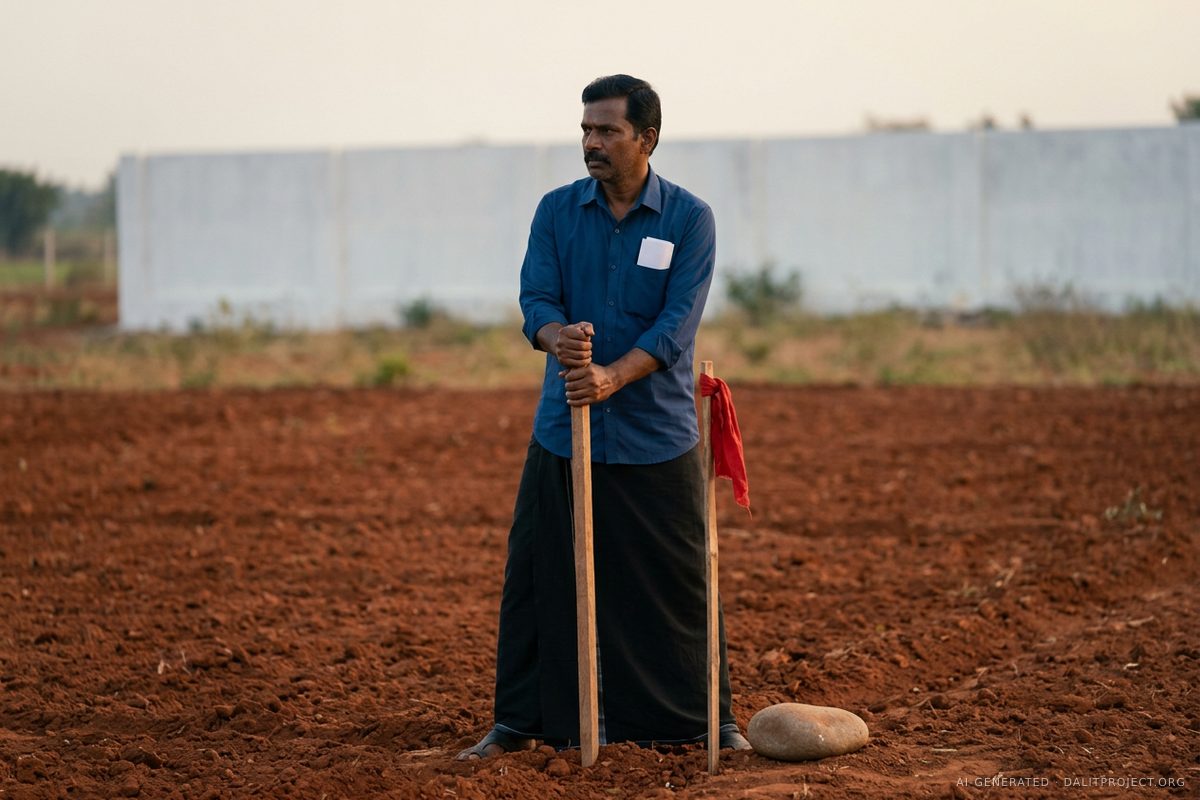
kasel tyachi jamin, nasel tyache kaay? (“Land to the tiller, but what about landless labour?”)
i
Source: Review of Agrarian Studies 10(1), 2020, p. 53Land reform in India is usually told as the story of the slogan “land to the tiller”: take land from landlords and give it to the people who farm it. In this article the scholar Awanish Kumar argues that B. R. Ambedkar saw a hole in that story. The tiller was usually a tenant from a landowning caste. The people who did the farm work for wages, mostly Dalits, owned nothing and were promised nothing.
Kumar’s starting point is that Ambedkar “identified the land monopoly of caste Hindus in village society as the material basis of the caste system” (p. 37). He also says that “a systematic study of his views on the land question and rural economy has not been undertaken” (p. 37), and sets out to give one.
What the study argued
Land is where caste power sits. Kumar reads Ambedkar’s description of the village: one major caste that “owns most of the land in the village”, and smaller castes “subservient” to it because they depend on it (p. 39, quoting Thoughts on Linguistic States, 1955). That landholding caste, he writes, “forms a recurrent theme in Ambedkar’s writings” (p. 39). Dalits were kept off land by money, by custom and sometimes by law. Ambedkar’s own example was Punjab’s Land Alienation Act, under which only listed communities could buy land, and “the Untouchables are excluded from the list” (p. 40, quoting the Writings and Speeches, vol. 5).
Land is also about dignity. Kumar’s clearest case is the Mahar watan, land held by Mahars in return for hereditary service to the village. In 1928 Ambedkar tried to amend the Bombay law that governed it. Holders could be called to serve at any hour, and their whole families were treated as village servants. “Thus, even in this case where Scheduled Castes had operational control over land, they were unable to free themselves of dependence on the village” (p. 40).
Against land reform built on peasant owners. Kumar shows Ambedkar standing apart from both the Congress and much of the Left. In 1951, as Law Minister, he defended the First Amendment, which, Kumar writes, “protected the right of the state to implement land reforms” (p. 44). In the same debate he asked what those laws did for the landless: “They will remain where they are – high and dry – notwithstanding the abolition of the zamindars” (p. 48). In 1954, in the Rajya Sabha, he said the most important thing the government could do was “the giving of land to the Scheduled Castes”, because “a person holding land has a higher status than a person not holding land” (p. 41).
His remedies. Kumar groups them in three (p. 45). The first was to annihilate caste. The second was industry and towns, to take people off the land: in 1918 Ambedkar wrote that “industrialisation of India is the soundest remedy for the agricultural problems of India” (p. 46). The third was to reorganise farming. In “States and Minorities” (1947), a draft of rights the Scheduled Castes Federation sent to the Constituent Assembly, he proposed that the state own all farmland and let it to groups of families to farm together, so that “there will be no landlord, no tenant and no landless labourer” (p. 48). He also asked for separate villages for Dalits, because in the village “the chief weapon in the armoury of the Hindus is economic power” (p. 49), and for government waste land, pasture and forest to go to the landless (p. 50). In 1954 he suggested bringing back the salt tax to pay for settling Scheduled Castes on waste land (p. 50). The Constituent Assembly accepted a few of the Federation’s demands on affirmative action, Kumar writes, but not those on land (p. 50).
He backed struggle on the ground. Kumar’s last section is about Dalits acting for themselves. In Marathwada, Dalits who had farmed government waste land had it taken from them in the early 1950s. On 9 August 1953 Ambedkar told a meeting that if the government took back land Dalits farmed, they should occupy government or cultivable waste land (p. 52). In the satyagraha that followed, more than 1,700 people were arrested in Aurangabad (p. 53). In Agra in March 1956 he told a large meeting to occupy waste land and say: “We will not leave the land, though we are willing to pay the appropriate revenue to the government” (p. 53). Kumar argues that this shows Ambedkar “supported militant struggle” for land in the early 1950s (p. 53), and that it answers Eleanor Zelliot’s view that he was not directly involved in the first land satyagraha (p. 53, note 9). The movement went on after his death, with Dalit and Left leaders, under a slogan that turned the old one around: “Land to the tiller, but what about landless labour?” (p. 53).
Why it matters
The land ceiling laws that followed independence were meant to free surplus land for the landless. The Data section’s ledger of that land, from the government’s answers to Parliament, shows how much was declared surplus, how much was handed out, and how many of those given land were Scheduled Castes. Kumar’s article explains why Ambedkar expected so little of that route, and what he asked for instead.
It also puts Dalits back into the history of land reform as people who organised, occupied land and went to jail, not only as people land was meant to reach. And it gives a reason why land given on paper is not enough. As Kumar puts it, the land question for Dalits was about “freedom from bondage” (p. 37) and the dignity of not depending on the village.
What the study does not show
- Evidence on land. It is a reading of Ambedkar’s texts. It has no figures on how much land Dalits held in his time or since.
- Whether he was right. It sets out Ambedkar’s remedies but does not test them, or weigh the critics of collective farming and separate villages.
- His words on ceilings. In 1954 Ambedkar told the Rajya Sabha that “this limitation of holdings therefore is an impossible thing”, because the government had already made peasants the owners: “You can’t sit on them : they will sit on you”. In 1955 he called fixing a maximum holding “quite a futile thing” (Writings and Speeches, vol. 15, pp. 914 and 960). Kumar’s summary, that a ceiling was “difficult” to ensure (p. 44), is milder than either.
- The 1953 satyagraha. Its details come from a Marathi biography and from Kumar’s own thesis, which this brief has not checked.
Talking points
- Ambedkar asked what land reform did for people who farmed land they did not hold. Who is in that position today, and what do the laws offer them?
- He wanted the state to own farmland and Dalits to have villages of their own. Which of those ideas still has supporters, and why?
- The Marathwada satyagraha took land that was legally the government’s. When is occupying land a legitimate way to claim it?
The work
Awanish Kumar, “B R Ambedkar on Caste and Land Relations in India”, Review of Agrarian Studies 10, no. 1 (January–June 2020), pp. 37–56. doi:10.25003/RAS.10.01.0005. Open access at ras.org.in.
About this study
- Who made it
- Awanish Kumar, Assistant Professor in the Department of Public Policy at St Xavier's College (Autonomous), as the article gives it. His PhD at the Tata Institute of Social Sciences, Mumbai, was on the Dalit land movement in Marathwada. The article appeared in the Review of Agrarian Studies, the open-access journal of the Foundation for Agrarian Studies, which sends submissions for peer review after the editors' screening. He thanks the journal's anonymous reviewers.
- How it was done
- A review of Ambedkar's writings and speeches, not a field study. Kumar reads across the Writings and Speeches volumes, from the 1915 Columbia dissertation to a 1956 speech in Agra, and draws on Gail Omvedt, Eleanor Zelliot and a Marathi biography of Dadasaheb Gaikwad for the land struggles. This brief is based on the full text of the article. Page numbers are the article's own. We checked the Ambedkar quotes it uses against the Government of India reprint of the Writings and Speeches.
- What it does not show
- Kumar reads Ambedkar closely and sympathetically, and does not weigh critics of his land programme or ask whether it would have worked. It has no figures on how much land Dalits held then or hold now. On one point it is softer than Ambedkar: it says he found a ceiling on holdings "difficult" to ensure (p. 44), where his words in the Rajya Sabha were "this limitation of holdings therefore is an impossible thing". The history of the 1953 satyagraha rests on a Marathi biography and on Kumar's own thesis, which we have not read.
- Corrections
- Corrections policy
More on Caste
Study
"Nobody to join the Untouchable": a philosopher takes Ambedkar's graded inequality beyond caste
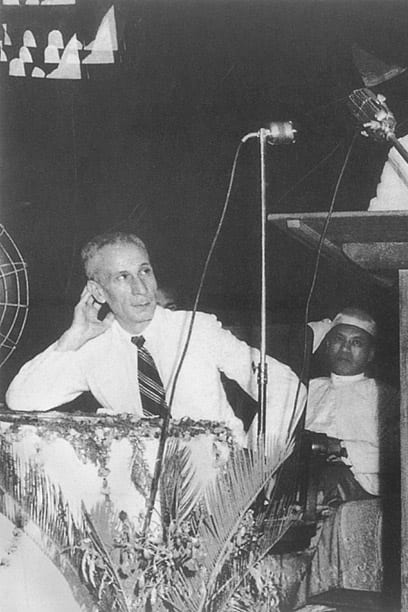
Yarran Hominh argues that oppression is not usually a matter of two groups, one on top and one below, but of many groups ranked one above another, the structure B. R. Ambedkar called graded inequality. He uses caste as the model, applies it to capitalism and to race in the United States, and names two ways the ranking keeps itself going.
Book
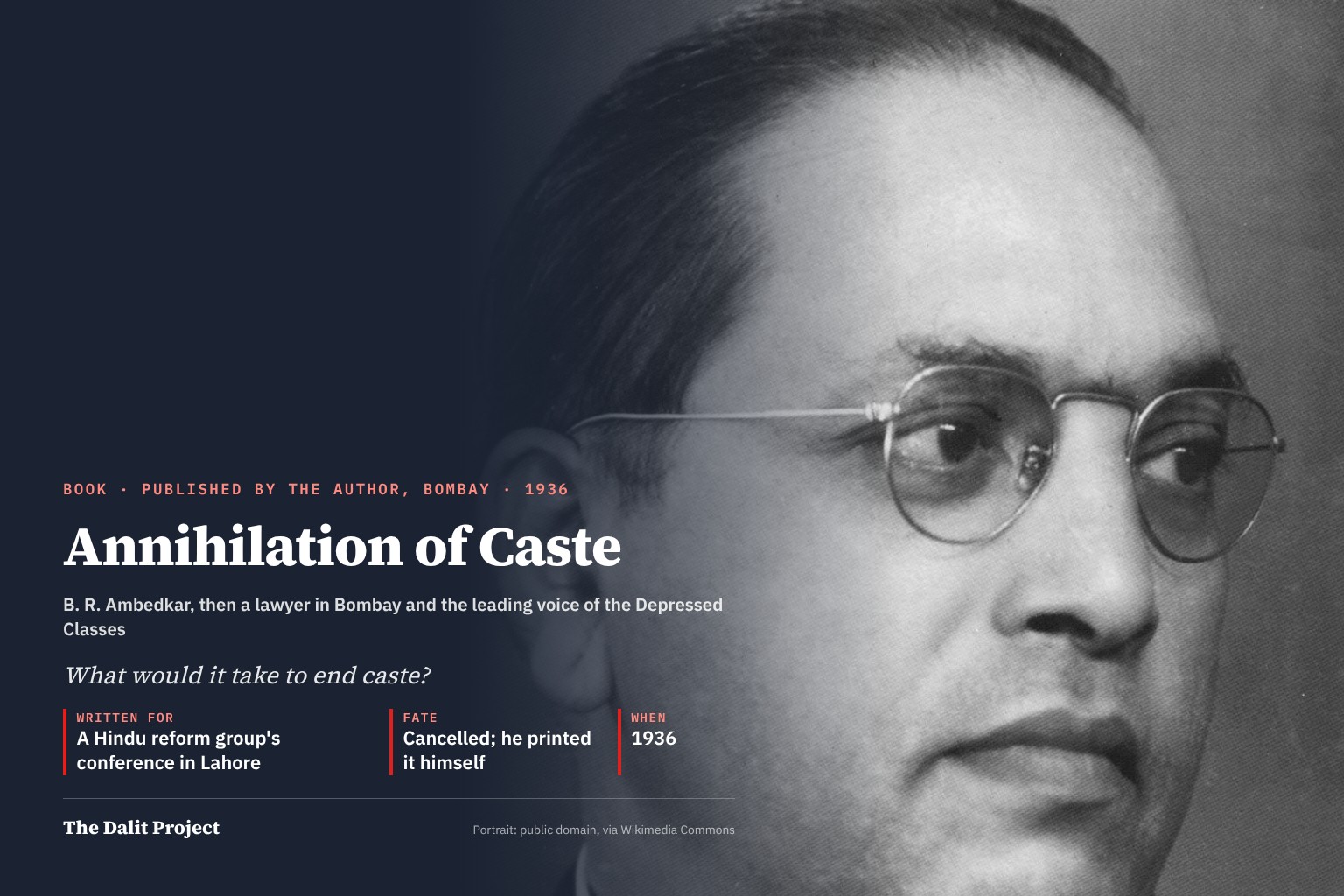
“Caste is a notion”: Ambedkar's Annihilation of Caste, the speech Lahore would not hear
In 1936 B. R. Ambedkar wrote a speech for a Hindu reform group in Lahore. When he would not cut his attack on the scriptures, the group cancelled its conference, so he printed the speech himself. It argues that caste can end only when people stop believing the scriptures that make it sacred.
Study
“A Caste is an Enclosed Class”: Ambedkar's 1916 theory of how caste began
In a seminar paper at Columbia University in 1916, a 25-year-old B. R. Ambedkar argued that caste is marriage closed within the group, held in place by controlling women, and that it spread by imitation and by exclusion.
Book
“Humiliation is a struggle concept”: Gopal Guru's Humiliation: Claims and Context
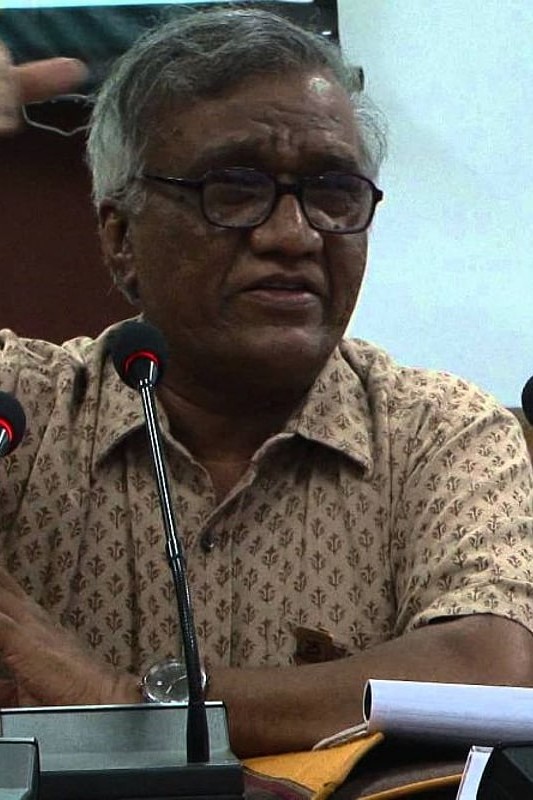
This 2009 book, edited by Gopal Guru, brings together twelve essays by eleven scholars that treat humiliation as a subject of political theory in its own right. Its central argument is that humiliation is a claim made by people who have come to expect respect, and that untouchability is its Indian form.